SEO vs AEO vs GEO: What Changes, What Overlaps and What Is Worth Paying For?
AEO and GEO are mostly SEO applied to new surfaces, with a few genuine differences. What each term means, what is worth paying for, and the red flags to watch for in proposals.
The short answer: answer engine optimization (AEO) and generative engine optimization (GEO) are best understood as search engine optimization (SEO) applied to newer surfaces, not as separate disciplines that replace it. Most of the work that helps a business appear in AI-generated answers is the same work that helps it rank: crawlable pages, clear and specific content, accurate structured data, a strong reputation and genuine authority. A few things do differ, mainly crawler access for non-Google AI platforms, how answers are written and how results are measured. Pay for those differences when they apply to you; be wary of anyone selling them as a secret replacement for the fundamentals.
The three terms defined
SEO improves visibility in traditional search results through technical health, relevant content, site structure and authority earned from other sites.
AEO is an older term that originally described optimizing for direct answers: featured snippets, voice assistants and "people also ask" boxes. It is now often used for being cited in AI-generated answers in general.
GEO was popularized by an academic paper, GEO: Generative Engine Optimization, first published in November 2023 by researchers including Pranjal Aggarwal and Karthik Narasimhan. It describes methods for increasing how often content appears in responses from generative AI engines. The authors reported visibility gains of up to 40% on their benchmark, and noted that effectiveness varied by domain. That is a research result on a test set, not a guarantee for any website.
In practice, agencies use AEO and GEO almost interchangeably. Ask anyone using either term exactly which deliverables they mean.
What overlaps and what differs
Area
SEO
AEO / GEO
Overlap
Crawlability and indexing
Essential
Essential, including for non-Google AI crawlers
High
Clear, specific, well-structured content
Essential
Essential; direct answers near the top help
High
Structured data
Helps search engines interpret pages
Same supported types; no special "AI schema"
High
Authority and reputation
Links, mentions, reviews
Mentions, reviews and citations across trusted sources
High
Keyword targeting
Queries with known volume
Longer, conversational questions; less volume data
Medium
Measurement
Rankings, clicks, conversions
Citations, mentions and referrals; less standardized
Low
Platform coverage
Mainly Google and Bing
Google AI features plus ChatGPT, Perplexity, Copilot and others
Medium
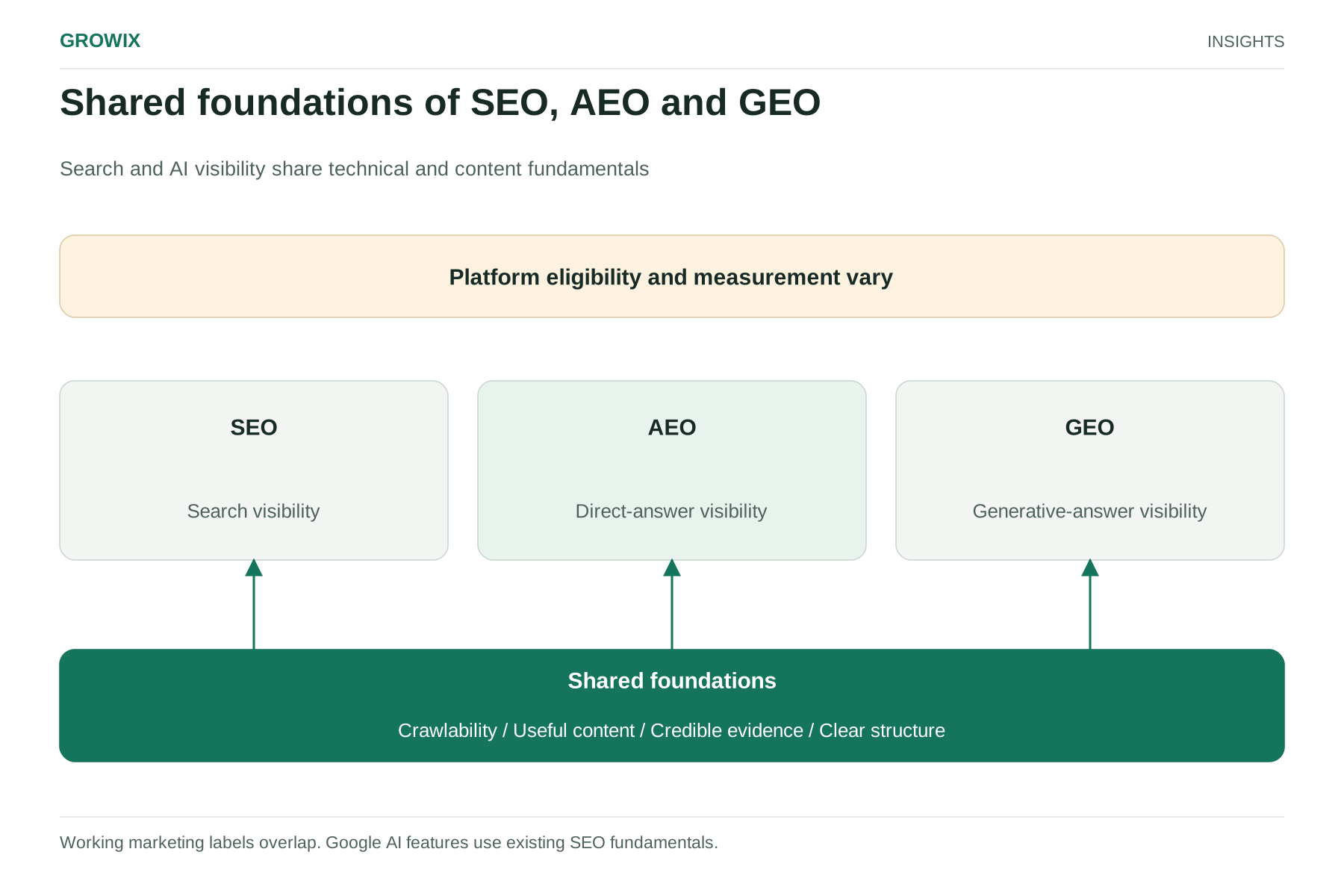
Shared foundations of SEO, AEO and GEO. Working marketing labels overlap. Google AI features use existing SEO fundamentals. View full size
Separate Google from other AI platforms
Google. Google's documentation on AI features and your website says there are no additional requirements or special optimizations needed to appear in AI Overviews or AI Mode. No special schema.org markup is required, nor any new machine-readable or AI text files. Pages must be indexed and eligible to appear with a snippet. Traffic from these features is reported in Search Console's Performance report under the Web search type. For Google, strong SEO is the AI search strategy.
Other AI platforms. Assistants such as ChatGPT, Perplexity and Microsoft Copilot use their own crawlers, indexes and partner data, and their documentation changes regularly. Crawler access is the most concrete difference. OpenAI's crawler documentation, for example, separates OAI-SearchBot, which surfaces sites in ChatGPT search, from GPTBot, which collects content that may be used for model training. Sites that block OAI-SearchBot will not be shown in ChatGPT search answers, apart from plain navigational links, while blocking GPTBot signals that content should not be used for training. Businesses can therefore choose to allow search visibility while opting out of training, but only if someone checks robots.txt, CDN and firewall settings deliberately.
What is worth paying for
These activities deliver value across classic search and AI answers:
Technical access audit: robots.txt, CDN bot rules, rendering, indexing and the specific AI crawlers you want to allow or block.
Content that answers real questions directly: clear definitions, specific facts, comparisons and steps, near the top of the relevant page, based on actual customer questions.
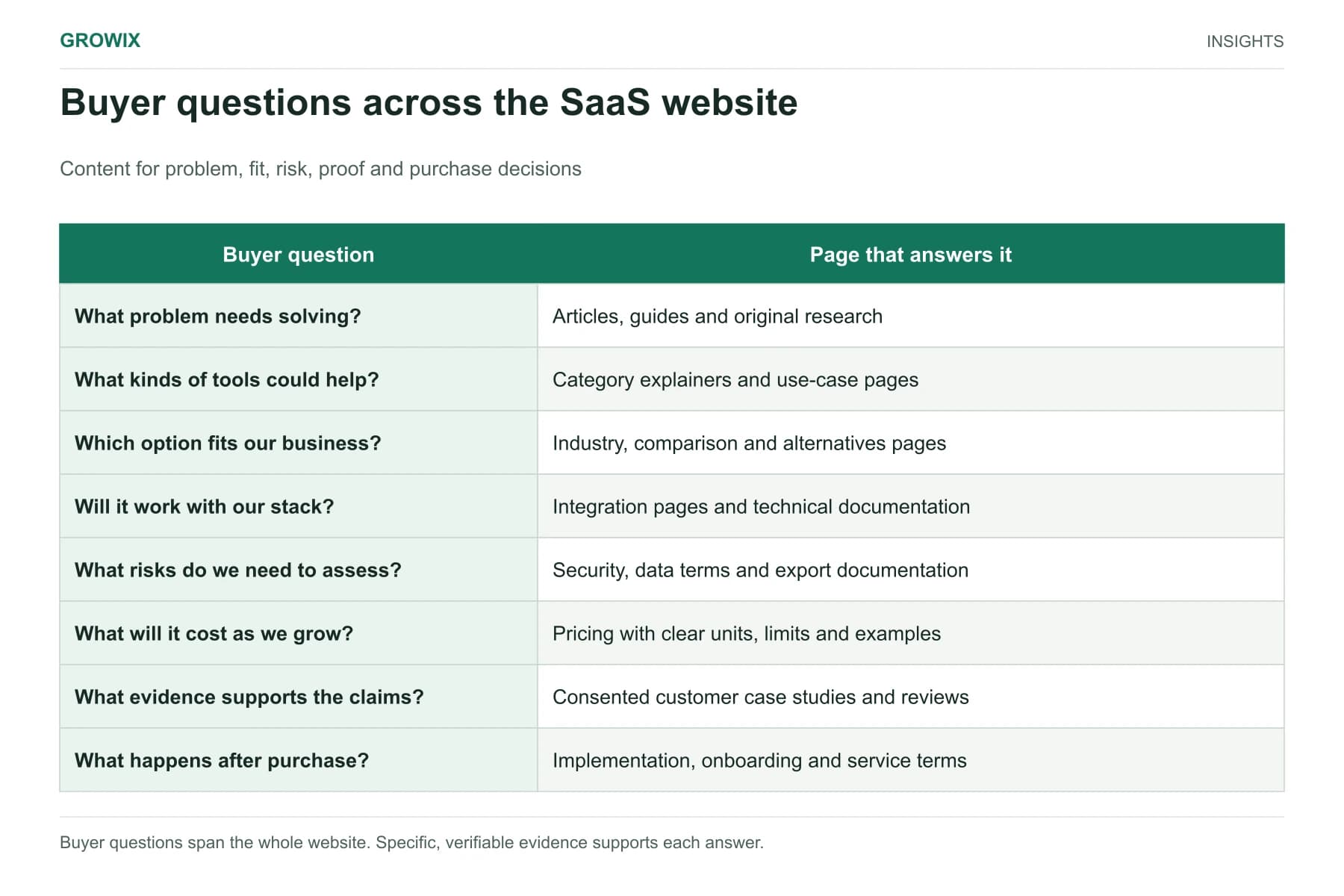
Factual pages buyers verify: pricing explanations, specifications, integrations, policies and documentation. Our guide to B2B SaaS content strategy shows how to map these.
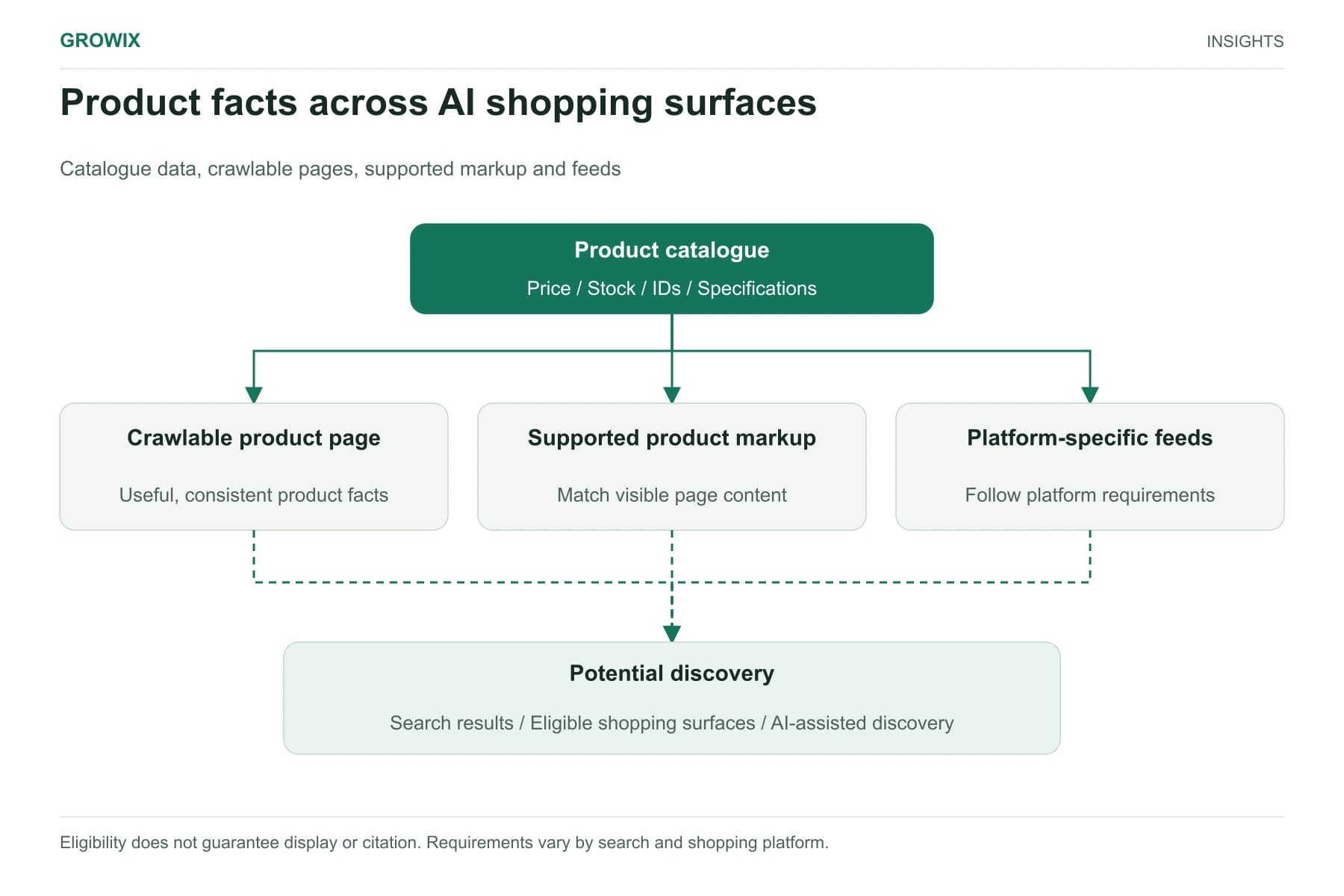
Supported structured data that matches the visible page, such as Organization, Product and Article markup where relevant.
Reputation and third-party presence: genuine reviews, accurate listings, expert contributions and original research others cite.
Measurement that connects to revenue: Search Console, analytics segments for AI referrals, and self-reported attribution on forms.
The writing practices often labeled AEO are mostly good editorial practice. Compare two openings for a page about payroll software for restaurants:
Weak: "In today's fast-paced hospitality industry, payroll can be a challenge for many businesses of all sizes."
Answer-ready: "Restaurant payroll software needs to handle tip reporting, variable shifts and multiple pay rates per employee. Our platform supports all three, starting at a published monthly price per location, and integrates with the main point-of-sale systems listed below."
The second version states specific facts a person or an AI system can use, and it points to evidence. Useful habits include:
Put the direct answer in the first two or three sentences, then expand.
Use descriptive headings that match how people phrase questions.
Include specific, verifiable facts: numbers with dates, named integrations, clear limits.
Keep one topic per page, and link related pages explicitly.
Show who is responsible for the content and when it was last reviewed, where that helps readers trust it.
Measure what you can, honestly
Measurement is the area where claims most often outrun reality. A practical approach combines:
Search Console for impressions, clicks and pages, including traffic from Google's AI features.
Analytics referral segments for visits from AI assistants that pass a referrer, with their conversion rates.
Form attribution: an open "How did you hear about us?" question, which increasingly surfaces mentions of AI tools.
A small, fixed set of tracked questions checked monthly across the assistants that matter to you, recorded as directional evidence rather than precise share.
Pipeline or revenue connected to the pages that matter.
What to be skeptical about
Guaranteed AI citations or rankings. No one controls what AI systems cite.
"AI schema" or special markup presented as required for AI visibility. Google says there is none.
llms.txt or similar files sold as a guarantee. Such files may be harmless, but Google states no new AI text files are needed for its AI features, and no platform has committed to using them for ranking.
Hidden text or content written only for machines. Content that users cannot see risks violating search engine spam policies.
Keyword repetition to target conversational queries.
Proprietary visibility scores as the main KPI. Prompt-tracking tools can show directional trends, but answers vary by user, location, wording and time.
Compare deliverables and measurement
A useful proposal for AI search work should specify:
Deliverable
What good looks like
Baseline
Current organic performance, crawler access, key pages and a sample of tracked questions
Technical fixes
A prioritized list with owners and expected effort
Content plan
Specific pages to create or improve, tied to buyer questions and business value
Authority plan
Realistic, ethical activities to earn mentions and reviews
Reporting
Organic traffic and conversions, AI referrals where measurable, tracked-question trends labeled as directional, and pipeline or revenue impact
Typical scope by business type
Local and service businesses: accurate business profiles, reviews, clear service and location pages, and fast mobile pages usually matter more than any AI-specific tactic.
B2B companies: answer-ready commercial pages, documentation, comparison content and third-party reviews carry most of the weight.
Online stores: product data, feeds, structured data and reviews dominate, as covered in our e-commerce guide.
An agency evaluation checklist
Ask each agency:
Which of your proposed activities differ from good SEO, and why?
Which AI platforms will you monitor, and how will you account for variability in answers?
How will you check crawler access for each platform we care about?
What will you report monthly, and how does it connect to leads or sales?
What will you not promise?
Who on the team does the technical work, and who writes the content?
When Growix may not be the right fit: if your site has serious technical problems, such as being largely unindexed, or no content strategy at all, the first priority is fundamental SEO and content work, and any specialist "AI visibility" package, from Growix or anyone else, should wait until those basics are fixed.
Frequently asked questions
What is generative engine optimization (GEO)?
Generative engine optimization means improving the chance that AI systems which generate answers, such as AI Overviews, ChatGPT or Perplexity, use and cite your content. The term was popularized by an academic paper first published in 2023. Most of the practical work overlaps with good SEO.
What is answer engine optimization (AEO)?
Answer engine optimization originally described optimizing content for direct answers such as featured snippets and voice assistants. Today agencies often use it interchangeably with GEO for visibility in AI-generated answers, so ask exactly which deliverables they mean.
Do you need a separate GEO or AEO agency?
Usually not. Crawler access, indexing, clear answers to real questions, accurate business information and a credible reputation help both classic rankings and AI answers. Be skeptical of guaranteed AI citations or special AI markup sold as a separate service.
Next step
Start with a short audit of crawler access, indexing and the twenty questions your customers ask most. That shows whether your gap is technical, content or authority, and which of the three labels actually describes the work you need.