Black Friday Customer Support for E-commerce: Staffing, Automation and Escalation Planning
Peak support fails when contact forecasts, coverage, automation and escalation are planned separately. Forecast from orders and returns, then rehearse the handoffs before the rush.
Black Friday falls on November 27 in 2026, and Cyber Monday on November 30. For e-commerce customer support teams, though, the peak lasts much longer: questions about promotions and stock before the weekend, order and delivery questions through December, and returns and exchanges well into January. Retailers surveyed for the National Retail Federation and Happy Returns' 2025 returns report expected 17% of holiday sales to be returned.
This guide covers Black Friday customer support planning in four steps: forecast contacts from orders and returns, set coverage and response targets, automate the requests that are safe to automate, and rehearse escalation and overflow before the rush begins.
Step 1: Forecast contacts from orders and returns
Start from your order forecast and last year's contact patterns, not from last year's headcount.
Forecast orders by day for the period from the week before Black Friday to mid-January.
Apply a contact rate: the share of orders that generate a contact, using last year's peak data. Contact rates often rise during peak, as delivery delays and promotion questions increase.
Split by contact reason: pre-purchase questions, order status, delivery problems, changes and cancellations, returns and refunds, and complaints. Each has a different handling time and suitability for automation.
Shift the curve: pre-purchase questions peak before and during the promotion; delivery questions follow a few days later; returns peak after the holidays.
Convert to staffing hours: contacts multiplied by average handling time, divided by an occupancy rate, because agents cannot handle contacts every minute of a shift.
Hypothetical example
The following figures are invented for illustration.
A store forecasts 20,000 orders in the week from Black Friday to the following Thursday. With a 12% contact rate, that is 2,400 contacts. At an average handling time of 9 minutes, the contacts need 360 hours of handling. At 75% occupancy, the team needs about 480 staffed hours over the week, or about 69 hours a day, roughly nine eight-hour agent shifts each day, concentrated in the hours when customers actually get in touch.
If 17% of those orders are later returned, that is about 3,400 returns, many generating contacts in late December and January. Plan for that second wave now.
Step 2: Set coverage and response targets
Decide what service you will provide during peak, then staff to it.
Channel
Example target during peak
Notes
Live chat
First response within a few minutes during staffed hours
Show expected wait times; offer a callback or email option when queues are long
Email and web forms
First response within 24 hours
Acknowledge automatically, with links to tracking and returns pages
Phone
Answer most calls within a set time during staffed hours
Use callbacks in place of long holds
Social media messages
Same day
Monitor public complaints separately for escalation
Agree coverage hours, including weekends and Thanksgiving week, and publish them. Customers are more tolerant of clear limits than of silence.
Coverage options include extended hours for existing staff, seasonal hires, cross-trained colleagues from other teams and outsourced overflow support. Each needs onboarding, access and knowledge in place before peak. Our guide to e-commerce seasonal staffing covers hiring and onboarding seasonal workers.
Step 3: Automate bounded requests
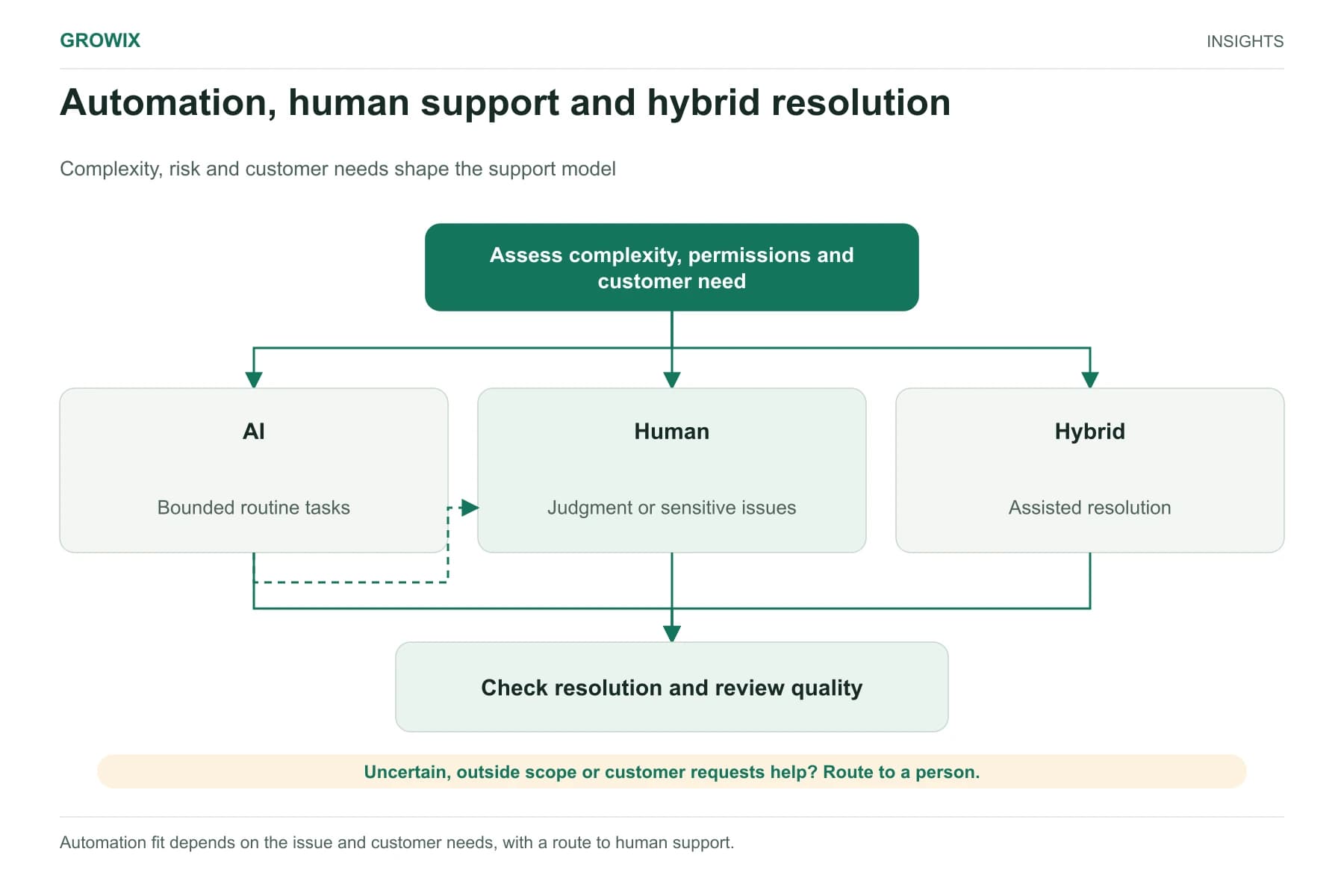
Automation helps most with high-volume, low-risk requests where the answer can be checked against data you hold:
Order status and tracking: proactive shipping and delay notifications reduce contacts; self-service tracking answers many of the rest.
Returns policy and return initiation: clear policy pages and a self-service returns portal with eligibility rules.
Promotion questions: a well-maintained page with terms, dates and exclusions.
Address and order changes: only where your systems can process them safely before dispatch.
Every agent, whether permanent, seasonal or outsourced, needs the same answers. Before peak:
Update the help center and internal knowledge base with promotion terms, shipping cut-off dates, holiday return windows and gift receipt policies.
Write saved replies for the ten most common contact reasons, including personalization fields and the next step for the customer.
Create a single page of "what changed this week" that supervisors update daily during peak.
Confirm that agents can see order, tracking and returns information without switching between too many systems.
Consistency matters as much as speed. Customers who receive different answers from different agents contact you again, which adds volume at the worst possible time.
Step 4: Rehearse escalations and overflow
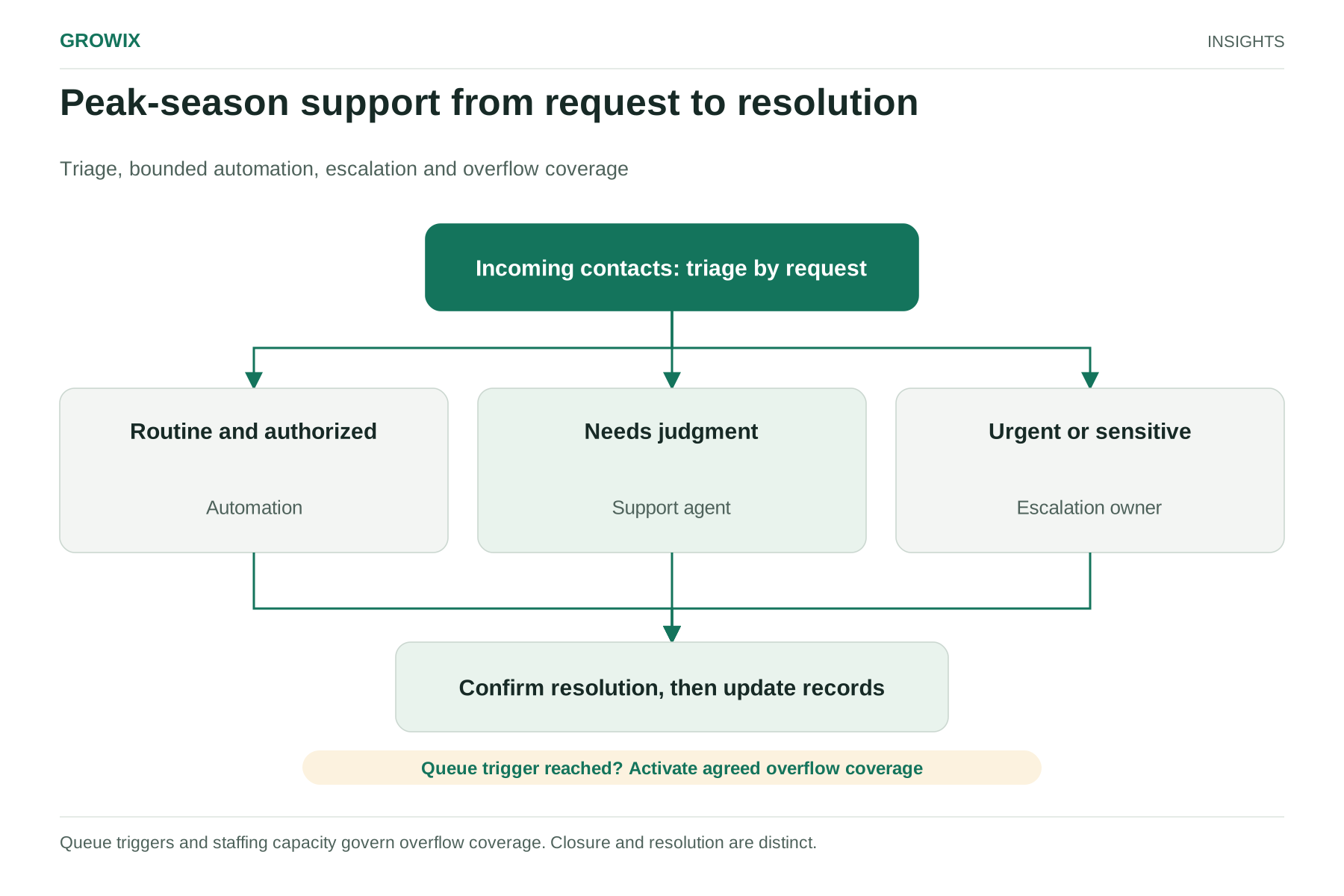
Decide in advance who handles the problems that cannot wait:
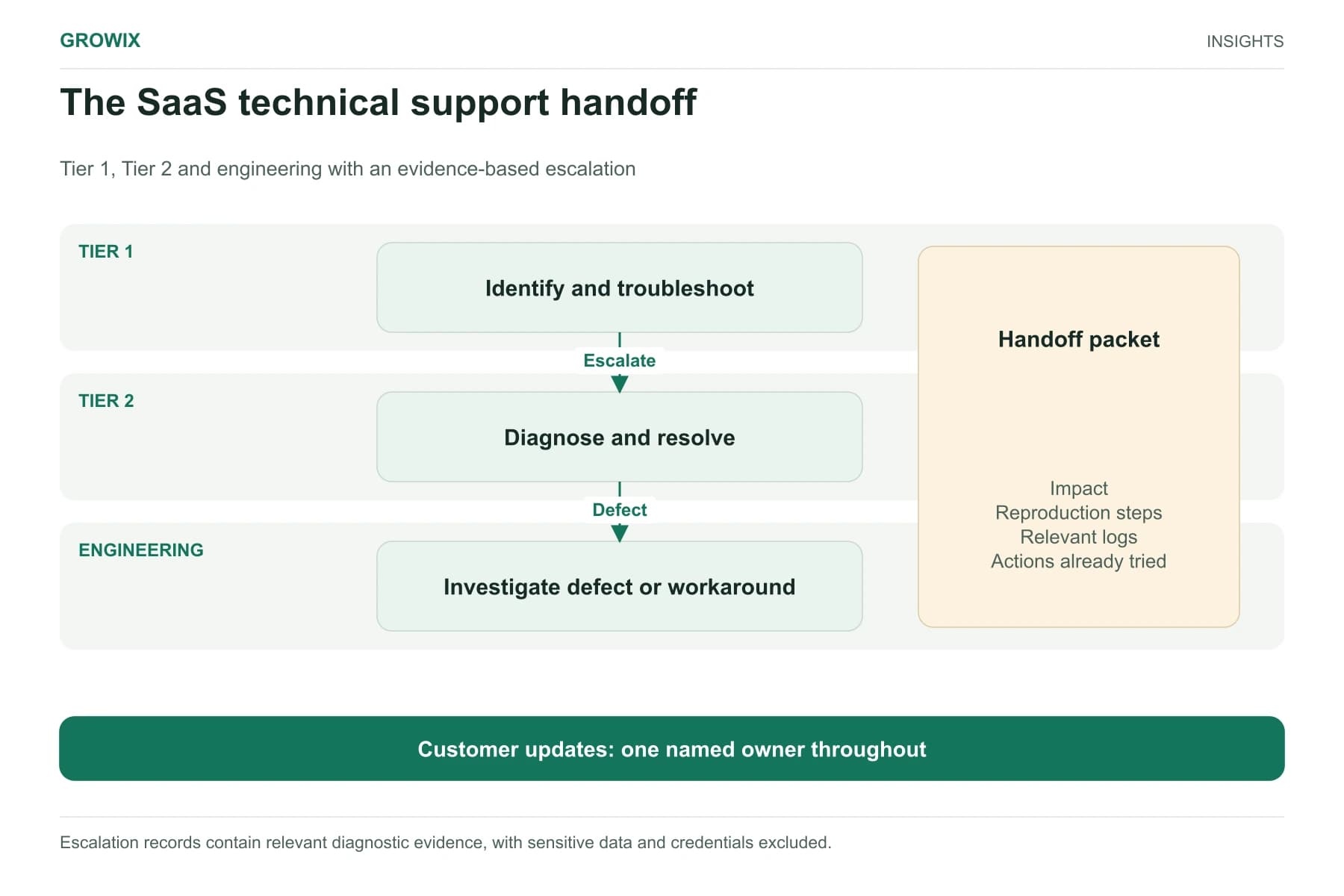
Website or checkout failures: a direct line from support to the technical on-call team. Our Black Friday website checklist covers monitoring and incident runbooks.
Payment and promotion errors: who can approve price adjustments or goodwill credits, and up to what amount.
Carrier failures: prepared messages and options when a carrier misses delivery promises.
Stock problems: what to tell customers when an item sells out after ordering.
Public complaints: who responds to social media escalations and press inquiries.
Run a short tabletop exercise with support leads, operations and the technical team: walk through two or three scenarios and check that everyone knows who decides what.
Define overflow rules too. When queues pass a threshold, which contact types are deferred, which channels get priority and when do you switch on extra capacity?
Peak-season support from request to resolution. Queue triggers and staffing capacity govern overflow coverage. Closure and resolution are distinct. View full size
Measures to watch during and after peak
Contact volume and contact rate by reason, against forecast.
First response time and resolution time by channel.
Backlog at the start and end of each day.
Customer satisfaction and complaint volume.
Self-service and automation containment, checked against repeat contacts to make sure customers were actually helped.
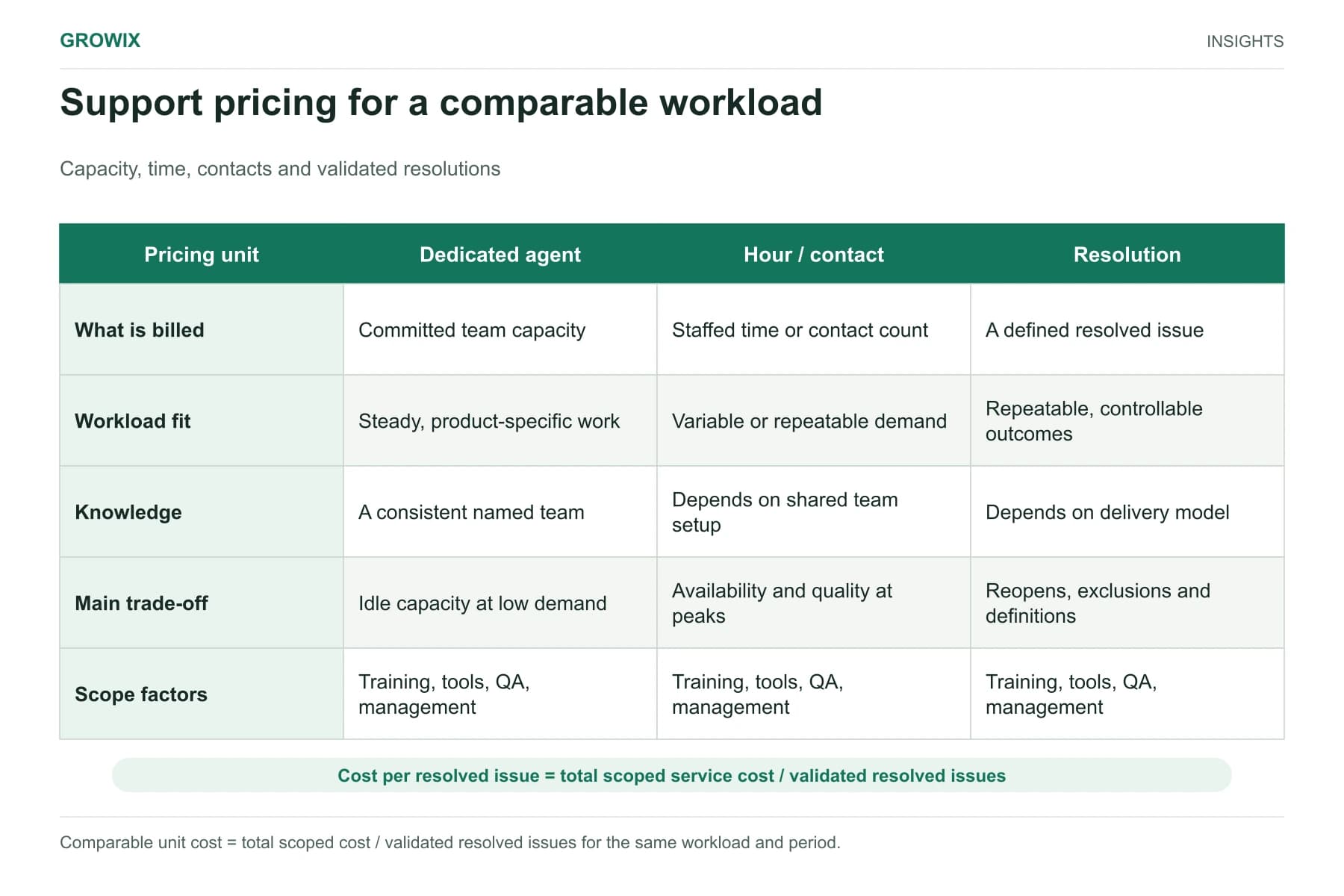
Cost per contact across in-house, seasonal and outsourced capacity.
Review the season in January while details are fresh, and record which forecasts missed and why. Look especially at contact reasons that grew faster than orders: they usually point to a fixable cause, such as unclear delivery estimates, confusing promotion terms or a returns step that customers cannot complete on their own. Fixing those causes is often cheaper than staffing for them again next year.
Frequently asked questions
How many support agents do you need for Black Friday?
Forecast contacts rather than copying last year's headcount: multiply forecast orders by your contact rate per order, add expected returns contacts, then convert contacts into agent hours using handling time and occupancy. In this guide's example, 20,000 orders at a 12% contact rate means about 2,400 contacts in the peak week.
Which Black Friday support requests can be automated?
High-volume, low-risk requests that can be checked against data you hold: order status and tracking, delivery delays, return policy questions, return label generation within the rules and simple account changes. Keep a visible route to a person for everything else.
Should you outsource customer support for peak season?
Outsourced or seasonal agents can cover extended hours and overflow, provided they are trained on the same knowledge base and saved replies as your own team, with clear escalation paths. Keep complex escalations and sensitive cases with experienced staff.
Getting support for peak
Growix's Customer Support Outsourcing service provides email, chat and phone support delivered on your behalf to your standards, and our E-commerce Operations Support team handles order support and store operations day to day. With weeks remaining before Black Friday, realistic options focus on overflow capacity for well-documented contact types and on preparing for the January returns wave.